Why Child Development Should Be Measured, Not Assumed
Parents make hundreds of decisions every day.
Many of those decisions are based on assumptions.
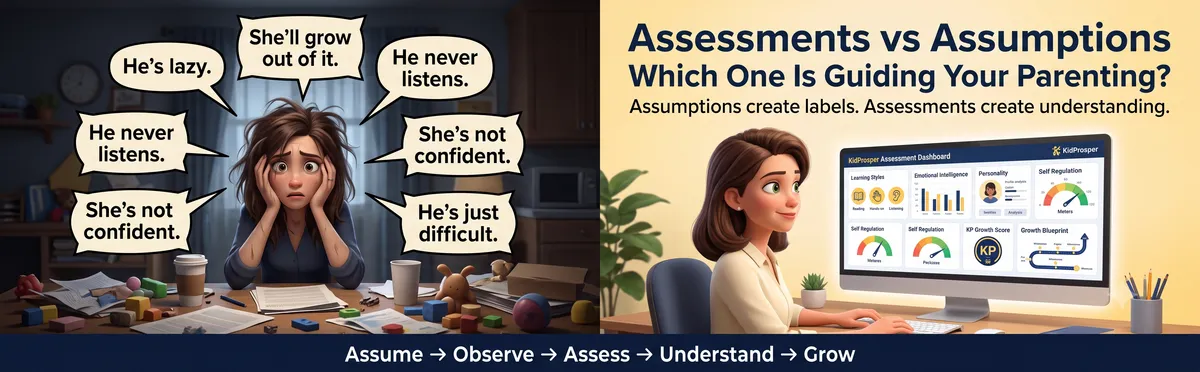
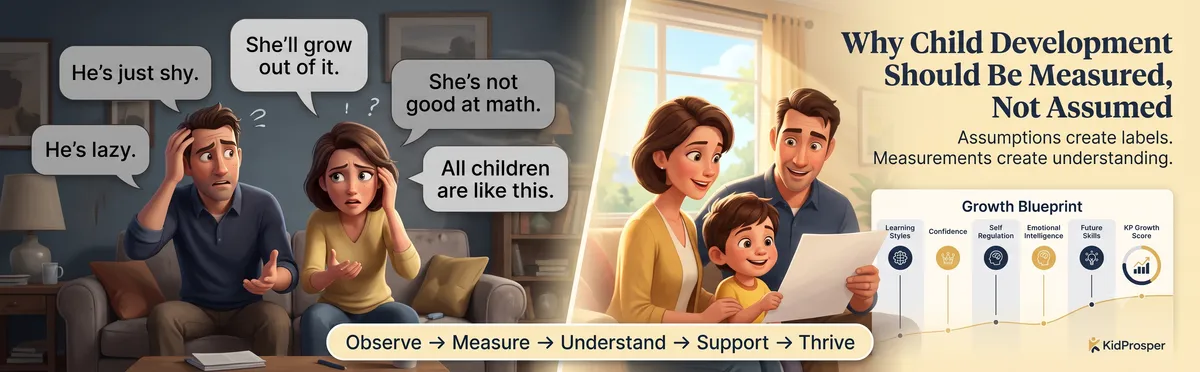
"My child is just shy."
"They'll eventually grow out of it."
"She's not a leader."
"He's lazy."
"That's just their personality."
Sometimes these assumptions are correct.
But often, they are not.
And when assumptions become labels, labels can become limitations.
Children should be understood through observations and measurements—not assumptions.
The Problem With Assumptions
Assumptions feel natural.
After all, parents spend more time with their children than anyone else.
But familiarity can sometimes create blind spots.
For example:
Assumption | Possible Reality |
|---|---|
"My child is lazy." | Low motivation or low confidence. |
"My child never listens." | Different learning style. |
"My child is shy." | Reflective personality or social anxiety. |
"My child is difficult." | Low emotional regulation. |
"My child isn't creative." | Creativity expressed differently. |
Behavior is information.
And information deserves investigation.
What Does "Measuring Development" Mean?
Measuring child development does not mean reducing children to scores or rankings.
It means understanding:
How they learn.
How they think.
How they process emotions.
What motivates them.
Which strengths they possess.
Which areas need support.
Measurement provides context.
And context changes everything.
Imagine Parenting Without Measurement
Imagine if doctors never measured:
Height.
Weight.
Blood pressure.
Temperature.
Instead, they simply guessed.
That would seem irresponsible.
Yet many parents are expected to navigate child development without any structured insights.
At KidProsper, we believe parents deserve better tools.
What Should Parents Measure?
Child development is multidimensional.
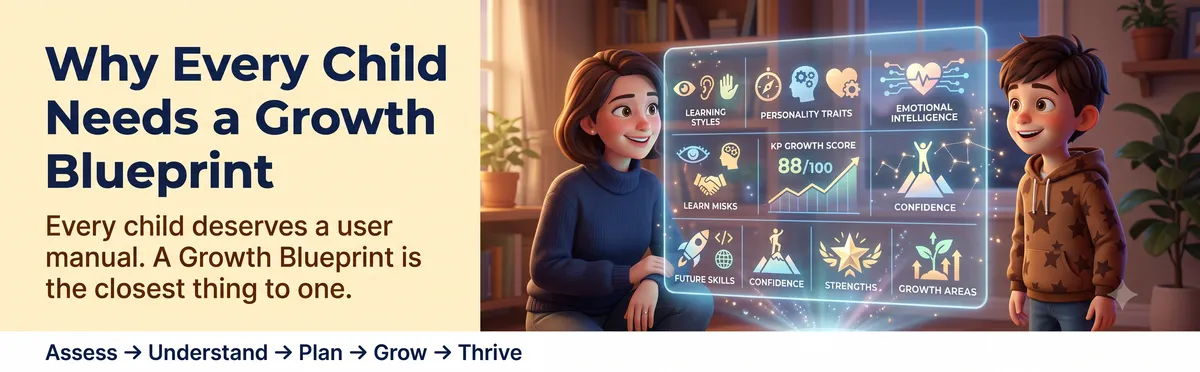
Parents should consider:
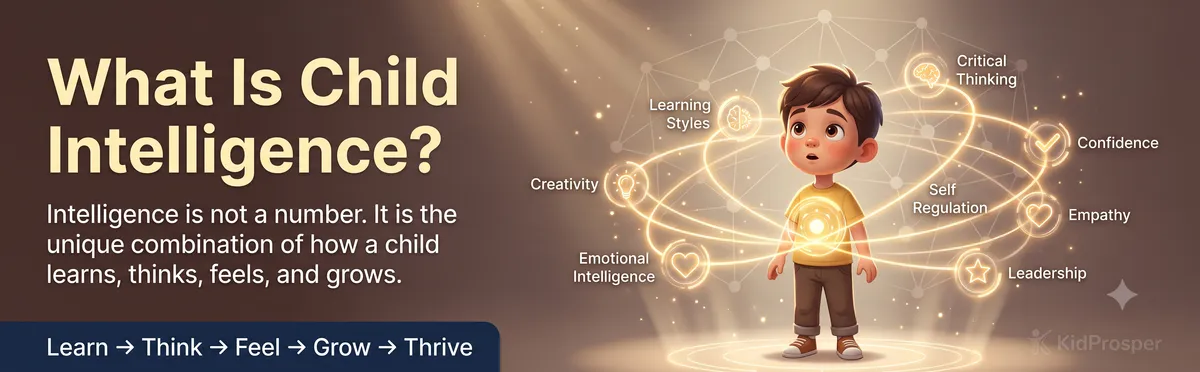
Learning Styles
Confidence
Self Regulation
Motivation
Emotional Intelligence
Critical Thinking
Empathy
Social Skills
Resilience
Future Skills
These factors influence how children learn, communicate, and navigate the world.
The Difference Between Labels and Insights
Label | Insight |
|---|---|
Lazy | Needs motivation support |
Shy | Reflective and observant |
Stubborn | Strong-willed and independent |
Emotional | Developing emotional regulation |
Distracted | Kinesthetic learner |
Labels close conversations.
Insights open them.
Why Measurement Matters
When parents measure development, they gain:
Clarity.
Confidence.
Consistency.
Better communication.
Personalized support strategies.
Instead of reacting to behaviors, parents begin understanding them.
That shift changes family dynamics.
KidProsper's Philosophy
KidProsper evaluates children across 40 developmental parameters.
These parameters help answer questions like:
How does my child learn best?
What motivates them?
How resilient are they?
How do they handle challenges?
Which future skills should we nurture?
The goal isn't to judge children.
The goal is to understand them.
The Cost of Getting It Wrong
Children often believe what adults repeatedly tell them.
When they hear:
"You're not good at this."
"You're always difficult."
"You're just not a leader."
Those statements can become part of their identity.
But what if those labels were based on incomplete information?
Measurement gives children something incredibly powerful:
The opportunity to be understood accurately.
Five Questions Every Parent Should Ask
What assumptions am I making about my child?
What evidence supports those assumptions?
How does my child learn best?
What strengths am I overlooking?
How can I better support their growth?
Common Parenting Mistakes
Confusing behavior with identity.
Comparing children.
Making assumptions without observations.
Focusing only on weaknesses.
Expecting children to fit a single definition of success.
Frequently Asked Questions
Should children be measured?
Yes—but thoughtfully. Measurement should provide understanding, not judgment.
Can developmental traits change?
Absolutely. Confidence, resilience, emotional intelligence, and many other skills can improve over time.
Does measurement create pressure?
Not when used correctly. The purpose is to provide support and insights—not rankings.
What does KidProsper measure?
KidProsper measures 40 developmental parameters across learning, personality, emotional intelligence, and future skills.
What is the biggest takeaway?
Assumptions create labels. Measurements create understanding.
Related Articles
The Science of Child Development: Understanding How Children Grow
Beyond Grades: Why Report Cards Don't Tell the Full Story
Stop Guessing, Start Knowing: The KidProsper Intelligence Method
Ready to Move Beyond Assumptions?
Your child deserves more than labels.
They deserve to be understood.
Because the moment we stop assuming is the moment we begin truly seeing our children.
Disclaimer: KidProsper is an educational and developmental platform intended to support parents through structured insights and recommendations. It is not a substitute for professional medical, psychological, or therapeutic advice.