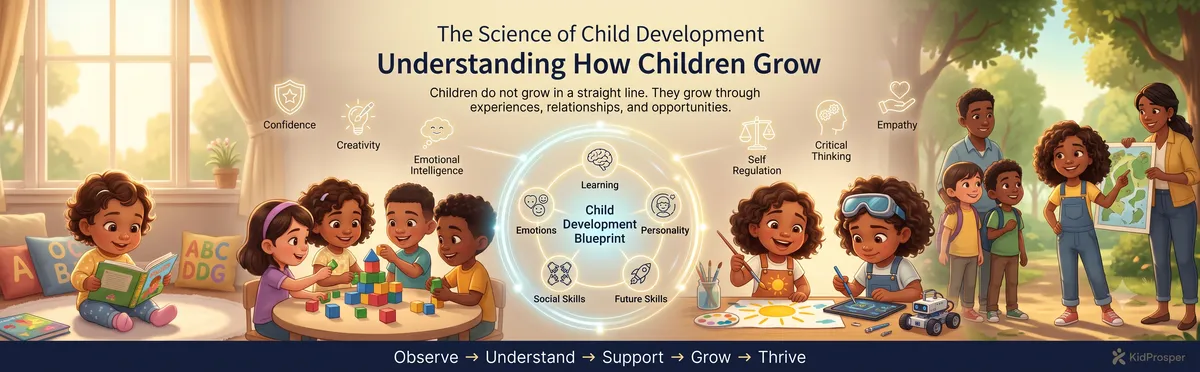
The Science of Child Development: Understanding How Children Grow
Every parent has wondered:
Is my child developing normally?
Why does my child behave differently from others?
What influences confidence and resilience?
How can I help my child reach their potential?
These questions have fascinated parents, educators, and scientists for generations.
Today, we know more about child development than ever before.
And perhaps the most important thing we've learned is this:
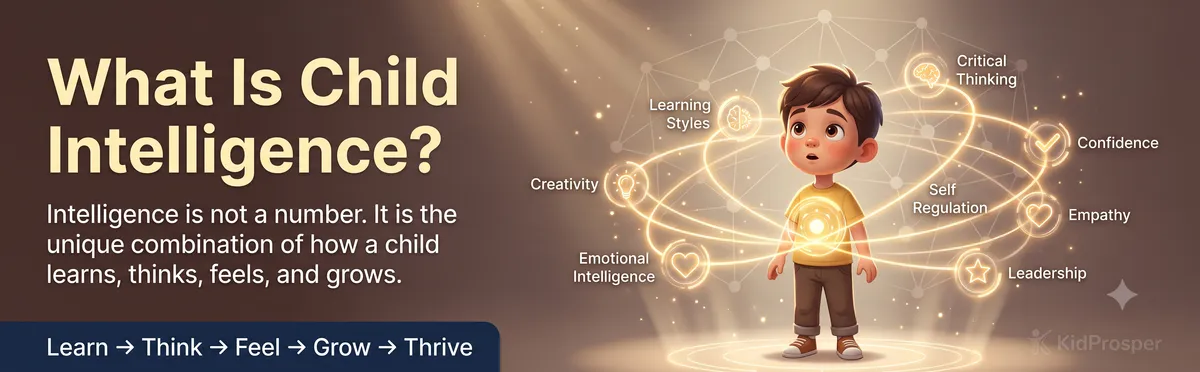
Children do not simply grow older. They grow in many different ways, all at the same time.
At KidProsper, we believe understanding child development is the foundation of confident parenting.
What Is Child Development?
Child development refers to the changes children experience as they grow.
These changes occur across multiple dimensions:
Physical Development
Cognitive Development
Emotional Development
Social Development
Behavioral Development
Together, these dimensions shape who children become.
Child development is not a race.
It is a lifelong journey.
The Five Pillars of Child Development
1. Cognitive Development
This includes:
Learning
Memory
Problem-solving
Critical thinking
Decision-making
Every child thinks differently, which is why personalized approaches to learning matter.
2. Emotional Development
Children learn to:
Recognize emotions.
Manage feelings.
Build confidence.
Develop resilience.
Emotional intelligence is one of the strongest predictors of long-term success.
3. Social Development
Children develop:
Empathy.
Communication.
Collaboration.
Relationship skills.
Humans are social beings. Learning to connect with others is essential.
4. Behavioral Development
This includes:
Self Regulation
Self Discipline
Habit Formation
Responsibility
Small daily behaviors often shape lifelong outcomes.
5. Future Skills Development
Modern children need skills that previous generations rarely discussed:
Creativity
Adaptability
Leadership
Problem Solving
Critical Thinking
The future belongs to children who can continuously learn and adapt.
What Influences Child Development?
Child development is influenced by many factors.
Factor | Examples |
|---|---|
Family | Relationships, support, communication |
School | Teachers, peers, learning environment |
Experiences | Travel, hobbies, challenges |
Habits | Sleep, routines, physical activity |
Environment | Safety, stability, opportunities |
Development is never influenced by a single factor.
It is the result of thousands of experiences over time.
Every Child Develops Differently
Two children can:
Learn differently.
Communicate differently.
Process emotions differently.
Develop confidence differently.
And all of this can be completely normal.
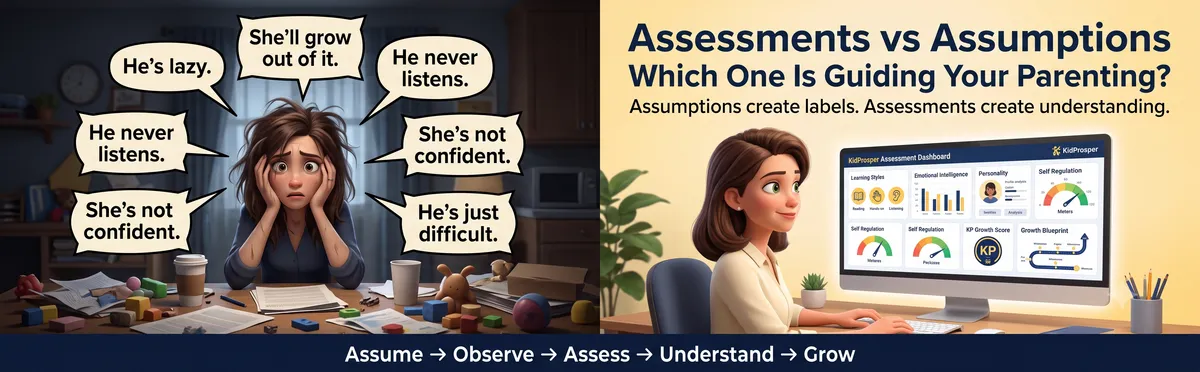
This is why comparison is often one of the biggest obstacles to healthy parenting.
Children are not machines following identical instructions.
They are individuals with unique strengths, challenges, and journeys.
Development Is Not Linear
Parents often expect growth to happen like this:
Good day → Better day → Best day
But child development usually looks more like:
Progress.
Setback.
Growth.
Plateau.
Breakthrough.
Growth is messy.
And that's perfectly normal.
Children are constantly learning from both success and failure.
The Role of Parents
Parents play one of the most important roles in child development.
You don't need to be perfect.
You simply need to:
Observe.
Understand.
Support.
Encourage.
Celebrate progress.
Children rarely remember perfect moments.
They remember feeling understood.
How KidProsper Helps
KidProsper helps parents understand development across 40 parameters.
These include:
Learning Styles
Attitude
Cognitive Styles
Temperament
Personality
Emotional Intelligence
Social Emotional Learning
Influences and Interests
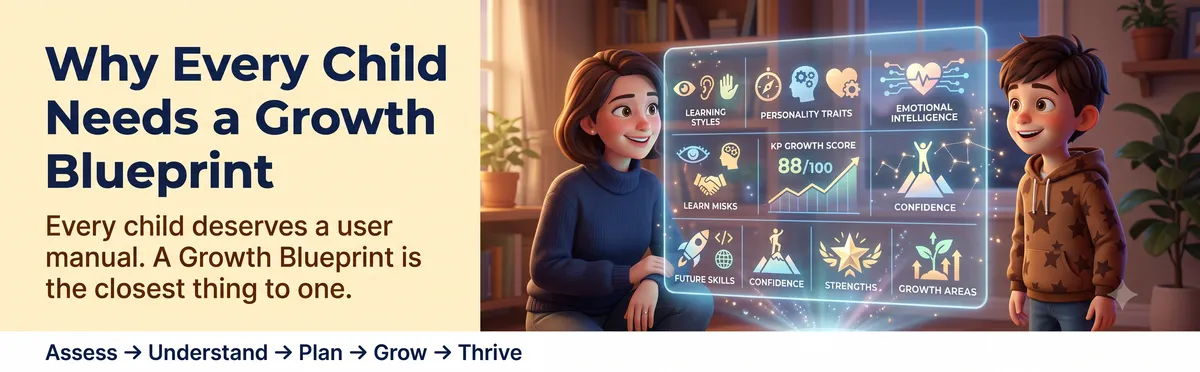
Through assessments, Growth Blueprints, activities, habits, and AI coaching, KidProsper helps transform developmental science into practical daily actions.
Five Things Every Parent Should Remember
Every child develops differently.
Progress matters more than perfection.
Behavior is often communication.
Children thrive when they feel understood.
Small daily actions create lifelong outcomes.
Common Parenting Mistakes
Comparing children.
Expecting instant results.
Focusing only on academics.
Ignoring emotional development.
Confusing temporary challenges with permanent limitations.
Frequently Asked Questions
What is child development?
Child development refers to the physical, cognitive, emotional, social, and behavioral changes that occur as children grow.
Do all children develop at the same pace?
No. Every child develops differently, and variation is completely normal.
What influences child development the most?
Family, relationships, experiences, environment, and opportunities all contribute significantly.
Can developmental skills improve over time?
Yes. Confidence, resilience, self regulation, empathy, and many other developmental skills can be nurtured throughout childhood.
Why is understanding child development important?
Because parents make better decisions when they understand how children learn, think, and grow.
Related Articles
Every Child Is Different: Why Generic Parenting Advice Doesn't Work
Beyond Grades: Why Report Cards Don't Tell the Full Story
Why Every Child Needs a Growth Blueprint
Ready to Understand Your Child's Growth?
Your child is growing every single day.
The question is not whether they are developing.
The question is whether we are paying attention to how they are developing.
Because understanding child development is the first step toward helping children thrive.
Disclaimer: KidProsper is an educational and developmental platform intended to support parents through structured insights and recommendations. It is not a substitute for professional medical, psychological, or therapeutic advice.