Every Child Is Different: Why Generic Parenting Advice Doesn't Work
Imagine two children growing up in the same home.
They eat the same food, attend the same school, have the same parents, and share many of the same experiences.
Yet one child loves reading while the other prefers building things with their hands.
One child talks openly about their emotions, while the other keeps everything inside.
One child eagerly tries new things, while the other carefully observes before participating.
If children raised in the same environment can be so different, why do we expect the same parenting advice to work for everyone?
This is the biggest challenge in modern parenting.
The Problem With Generic Parenting Advice
Most parenting advice begins with phrases like:
"Every child should..."
"Parents must always..."
"The best way to handle this is..."
While these recommendations are often well-intentioned, they assume that children are fundamentally similar.
But children are not identical.
Children differ in:
Learning styles
Temperament
Personality traits
Emotional intelligence
Motivation
Confidence
Social skills
Family influences
As a result, the same parenting strategy can produce completely different outcomes.
One Home, Two Different Children
Consider these examples:
Child A | Child B |
|---|---|
Loves picture books | Prefers listening to stories |
Highly social | Reserved and reflective |
Learns by doing | Learns by observing |
Thrives with flexibility | Needs routines |
Enjoys competition | Prefers collaboration |
Neither child is better.
They are simply different.
Unfortunately, many parents spend years trying to turn Child B into Child A.
Why Parents Feel Frustrated
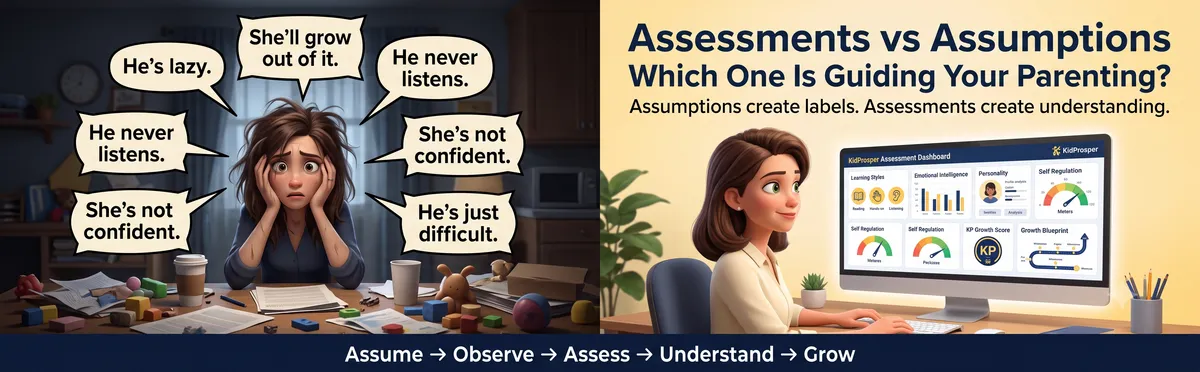
Many parenting struggles begin with a mismatch between expectations and reality.
Parents often think:
"Why won't my child focus?"
"Why doesn't my child listen?"
"Why is my child so emotional?"
"Why isn't my child motivated?"
But what if the real question is:
"Am I expecting my child to behave like someone they are not?"
Understanding your child's unique profile changes everything.
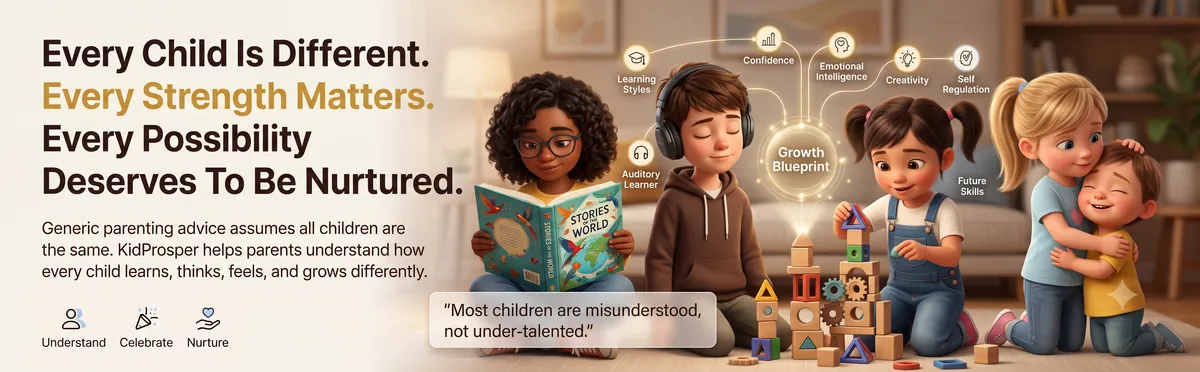
Every Child Has a Unique Blueprint
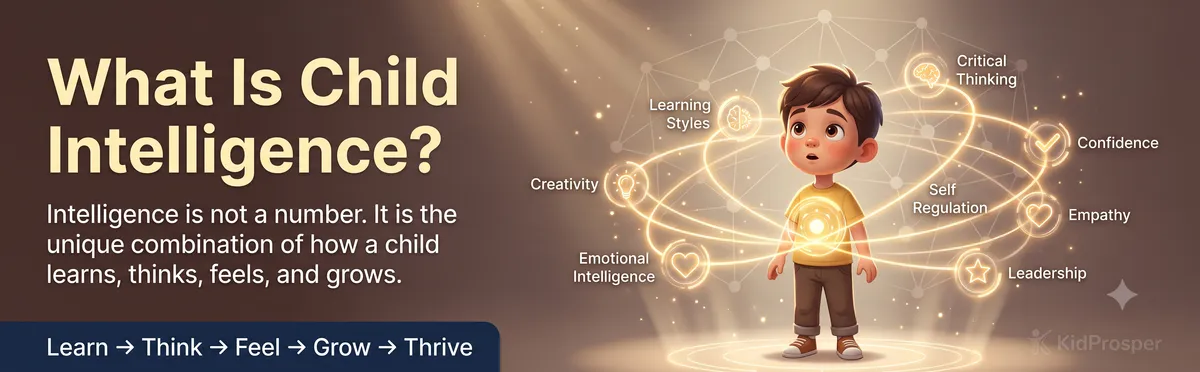
At KidProsper, we believe every child has a unique developmental blueprint.
This blueprint is shaped by:
How they learn.
How they think.
How they process emotions.
How they interact socially.
How they respond to challenges.
How they are influenced by their environment.
These factors combine to create a child who is entirely unique.
That is why parenting should be personalized.
Children Are Different From Day One
Some parents believe differences only become visible as children grow older.
In reality, children begin expressing their individuality from a very young age.
For example:
Parameter | Child 1 | Child 2 |
|---|---|---|
Visual Learning | Prefers picture books | Prefers verbal explanations |
Self Regulation | Waits patiently | Acts immediately |
Confidence | Volunteers answers | Needs encouragement |
Empathy | Comforts others | Observes quietly |
These differences are not problems to fix.
They are characteristics to understand.
What Happens When Children Are Misunderstood?
Children who are repeatedly misunderstood may:
Lose confidence.
Become frustrated.
Feel "not good enough."
Withdraw socially.
Develop negative associations with learning.
Many children are not struggling because they lack potential.
They are struggling because nobody has taught them in a way that works for them.
This is why KidProsper's philosophy is:
Most children are misunderstood, not under-talented.
The Shift From Generic Parenting to Personalized Parenting
Traditional parenting asks:
How do I make my child fit the system?
Personalized parenting asks:
How do I help the system work better for my child?
This shift changes:
Communication.
Learning.
Discipline.
Habits.
Relationships.
Confidence.
How KidProsper Helps
KidProsper helps parents understand their children across 40 developmental parameters.
These include:
Learning Styles
Cognitive Styles
Temperament Traits
Personality Traits
Emotional Intelligence
Social Emotional Learning
Influences and Interests
Using these insights, parents receive:
Growth Blueprints
KP Scores
Personalized Activities
Habit Recommendations
AI Coaching Support
The goal is not to change who your child is.
The goal is to help them become the best version of themselves.
Five Things Every Parent Should Remember
Comparison steals confidence.
Different does not mean deficient.
Children learn in different ways.
Behavior is communication.
Understanding always comes before improvement.
Common Parenting Mistakes
Comparing siblings.
Using the same strategy for every child.
Focusing only on grades.
Ignoring emotional needs.
Expecting children to develop at the same pace.
Frequently Asked Questions
Why doesn't the same parenting advice work for every child?
Because children differ in personality, learning styles, emotional development, and life experiences.
Can two siblings have completely different personalities?
Yes. Siblings often differ significantly despite growing up in the same environment.
Does being different mean something is wrong with my child?
No. Differences are a normal part of child development.
Can children improve areas where they struggle?
Absolutely. Every developmental parameter can be nurtured and improved over time.
What is the first step toward understanding my child?
Begin by observing your child's behaviors without judgment and identifying their unique strengths and challenges.
Related Articles
What Is KidProsper? The World's First Child Intelligence Operating System
Stop Guessing, Start Knowing: The KidProsper Intelligence Method
Why Every Child Needs a Growth Blueprint
Ready to Understand Your Child Better?
Your child is not a problem to solve.
Your child is a person to understand.
Complete your first KidProsper Assessment and discover your child's unique Growth Blueprint.
Because every child is different—and that's exactly what makes them extraordinary.
Disclaimer: KidProsper is an educational and developmental platform intended to support parents through structured insights and recommendations. It is not a substitute for professional medical, psychological, or therapeutic advice.