Beyond Grades: Why Report Cards Don't Tell the Full Story
Report card day can be emotional.
For some families, it brings celebration.
For others, it brings disappointment, anxiety, and difficult conversations.
Parents ask:
Why didn't you score higher?
Did you study enough?
How did your classmates perform?
Will these grades affect your future?
But perhaps the most important question is:
Are grades telling us the complete story?
At KidProsper, we believe the answer is no.
What Report Cards Measure
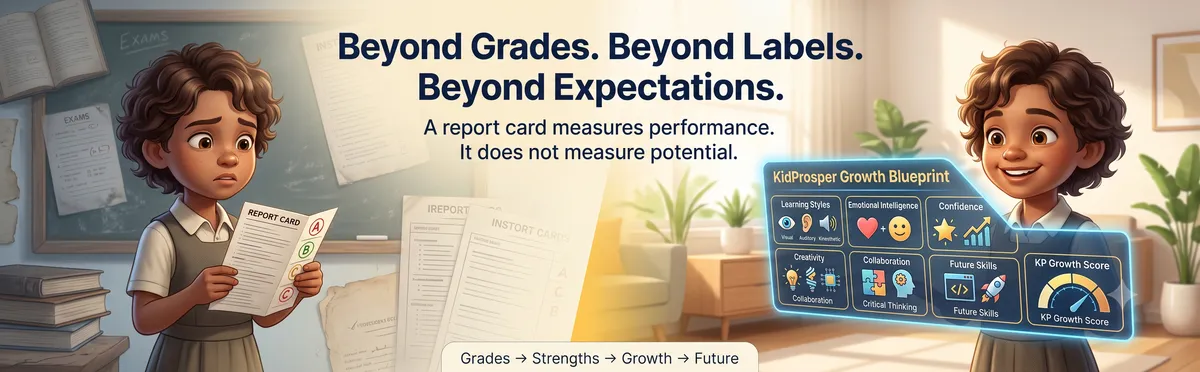
Report cards are designed to evaluate academic performance.
They typically measure:
Test scores.
Assignments.
Class participation.
Attendance.
Subject-specific performance.
These are valuable indicators.
However, they represent only a small portion of a child's development.
A report card answers:
"What did this child achieve?"
It does not answer:
How does this child learn?
How do they handle failure?
What motivates them?
How resilient are they?
How confident are they?
How do they collaborate with others?
What are their future strengths?
Performance Is Not Potential
A child may receive average grades while possessing extraordinary strengths.
Consider these examples:
Report Card | Hidden Strength |
|---|---|
Average in Math | Highly creative thinker |
Struggles in Writing | Exceptional empathy |
Low test scores | Strong leadership skills |
Quiet in class | Reflective and analytical |
Distracted during lectures | Kinesthetic learner |
History is filled with people whose strengths could never have been predicted by their report cards.
Children are more than grades.
The Skills Missing From Every Report Card
Most schools do not formally assess:
Confidence
Resilience
Self Regulation
Empathy
Motivation
Critical Thinking
Creativity
Collaboration
Adaptability
Emotional Intelligence
Ironically, these are often the skills that matter most in adulthood.
Ask yourself:
Which is more important?
Memorizing facts for an exam?
Learning how to solve problems and work with people?
Both matter.
But only one appears on a report card.
The 40 Parameters of Child Development
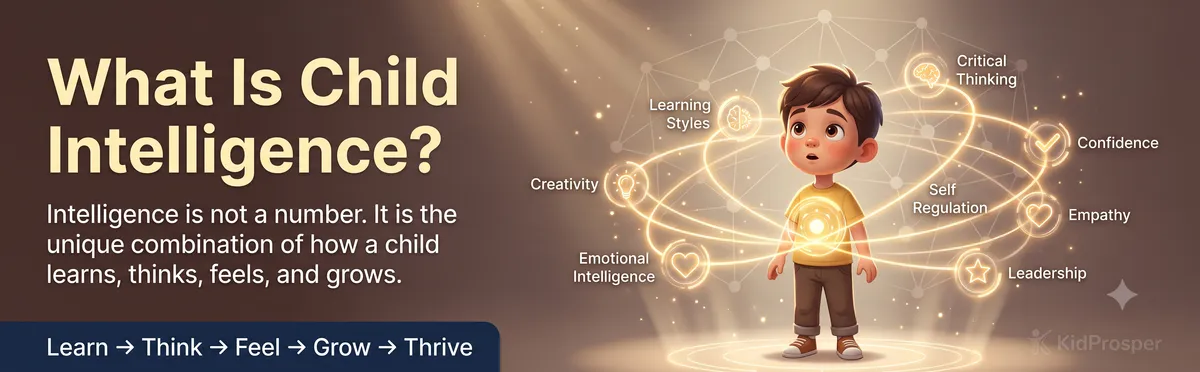
KidProsper evaluates children across 40 developmental parameters.
These include:
Learning Styles
Cognitive Styles
Attitude
Temperament
Personality
Emotional Intelligence
Social Emotional Learning
Influences and Interests
Together, these parameters help parents understand the complete child—not just their academic performance.
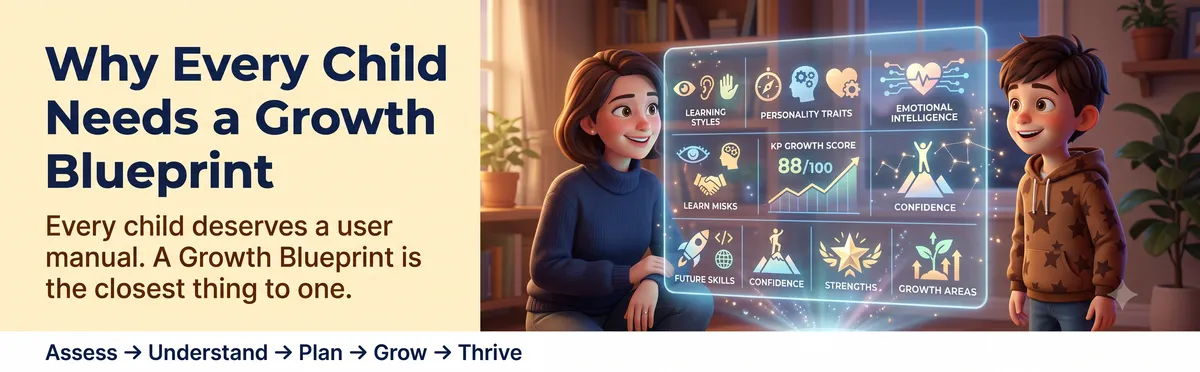
Imagine a Different Kind of Report Card
Imagine receiving a report card that included:
Traditional Report Card | KidProsper Growth Blueprint |
|---|---|
Math | Confidence |
Science | Self Regulation |
English | Emotional Intelligence |
Attendance | Motivation |
Exam Scores | Future Skills |
Which report would tell you more about your child's future?
We believe parents deserve both.
Why Children Need More Than Labels
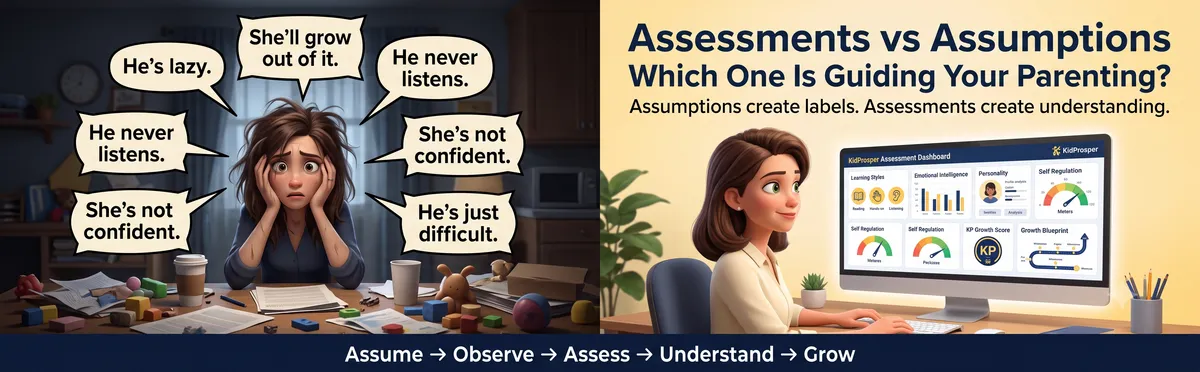
Children quickly internalize labels.
"I'm bad at math."
"I'm not smart."
"I'm not good enough."
"I'm always behind."
These beliefs can stay with children for years.
But a child who struggles academically may still become:
An entrepreneur.
An artist.
A teacher.
A leader.
A designer.
A scientist.
Children should never confuse a temporary result with a permanent identity.
The Future Belongs to More Than Top Scorers
The world is changing.
Employers increasingly value:
Problem-solving.
Communication.
Adaptability.
Leadership.
Creativity.
Collaboration.
These are human skills.
And they cannot be measured by a percentage on a report card.
Five Things to Tell Your Child on Report Card Day
I am proud of your effort.
Your grades do not define you.
Every child learns differently.
We will grow together.
You are capable of amazing things.
Common Parent Mistakes
Comparing report cards.
Focusing only on weaknesses.
Using grades as labels.
Ignoring non-academic strengths.
Equating performance with potential.
Frequently Asked Questions
Are grades important?
Yes. Grades provide useful academic feedback, but they should not be the only measure of a child's development.
Can children succeed without being top performers?
Absolutely. Success is influenced by many factors beyond academics, including resilience, emotional intelligence, and adaptability.
Does KidProsper replace school assessments?
No. KidProsper complements traditional education by helping parents understand developmental strengths that schools may not measure.
What should parents focus on most?
Focus on progress, effort, strengths, and continuous growth.
What is the biggest takeaway?
A report card measures performance. It does not measure potential.
Related Articles
Every Child Is Different: Why Generic Parenting Advice Doesn't Work
Stop Guessing, Start Knowing: The KidProsper Intelligence Method
Why Every Child Needs a Growth Blueprint
Ready to See Beyond Grades?
Your child's future is bigger than a percentage, letter grade, or rank.
Discover the strengths that report cards cannot measure.
Because every child is more than a number.
Disclaimer: KidProsper is an educational and developmental platform intended to support parents through structured insights and recommendations. It is not a substitute for professional medical, psychological, or therapeutic advice.